Sample approval and pre-shipment inspection answer different questions. The sample establishes the product you want to buy. Inspection checks production against that approved specification and the agreed criteria.
This is a practical buying checklist, not a test report or certification. It does not claim that any listed model has passed a particular laboratory test. Set the checks, acceptance criteria and any independent testing with the exact product and destination market in mind.
Keep an approved reference
Before production, record the sample version, dimensions, materials, colours, branding and packaging. Keep the approved sample or agree a reference that everyone can identify. Write down changes rather than relying on a message saying "same as the photo".
If the sample uses a substitute material or temporary logo, mark that clearly. Confirm how the final material or decoration will be approved before the production run proceeds.
Check fit and usability on the sample
Put the intended equipment in the bag. Check not only whether it fits inside, but whether the openings, separators and straps work for the person carrying it.
- Measure the agreed external dimensions and critical pocket openings.
- Check shoe, ball, racket or laptop compartments against your actual items.
- Open and close pockets with the expected contents in place.
- Adjust straps and check whether handles and closures are easy to use.
- Look for rough edges, uncomfortable contact points and loose components.
For a load or repeated-use check, agree the weight, method and acceptance criteria in advance. A casual demonstration with an unspecified load cannot establish a performance rating.
Inspect workmanship and components
| Area | What to look at |
|---|---|
| Seams and stitching | Loose threads, missed stitches, seam alignment and agreed reinforcement |
| Straps and handles | Attachment points, adjustment and the agreed construction |
| Zippers and buckles | Operation, alignment, sharp edges and the specified component |
| Fabric and lining | Visible damage, inconsistent finish and the agreed material reference |
| Compartments | Layout, dimensions, access and separation of contents |
Some checks are visual; others need a defined functional method. Agree what will be checked and how results will be recorded. Do not convert a visual inspection into a claim about waterproofing, chemical safety or long-term durability.
Example: look beyond the strap photo
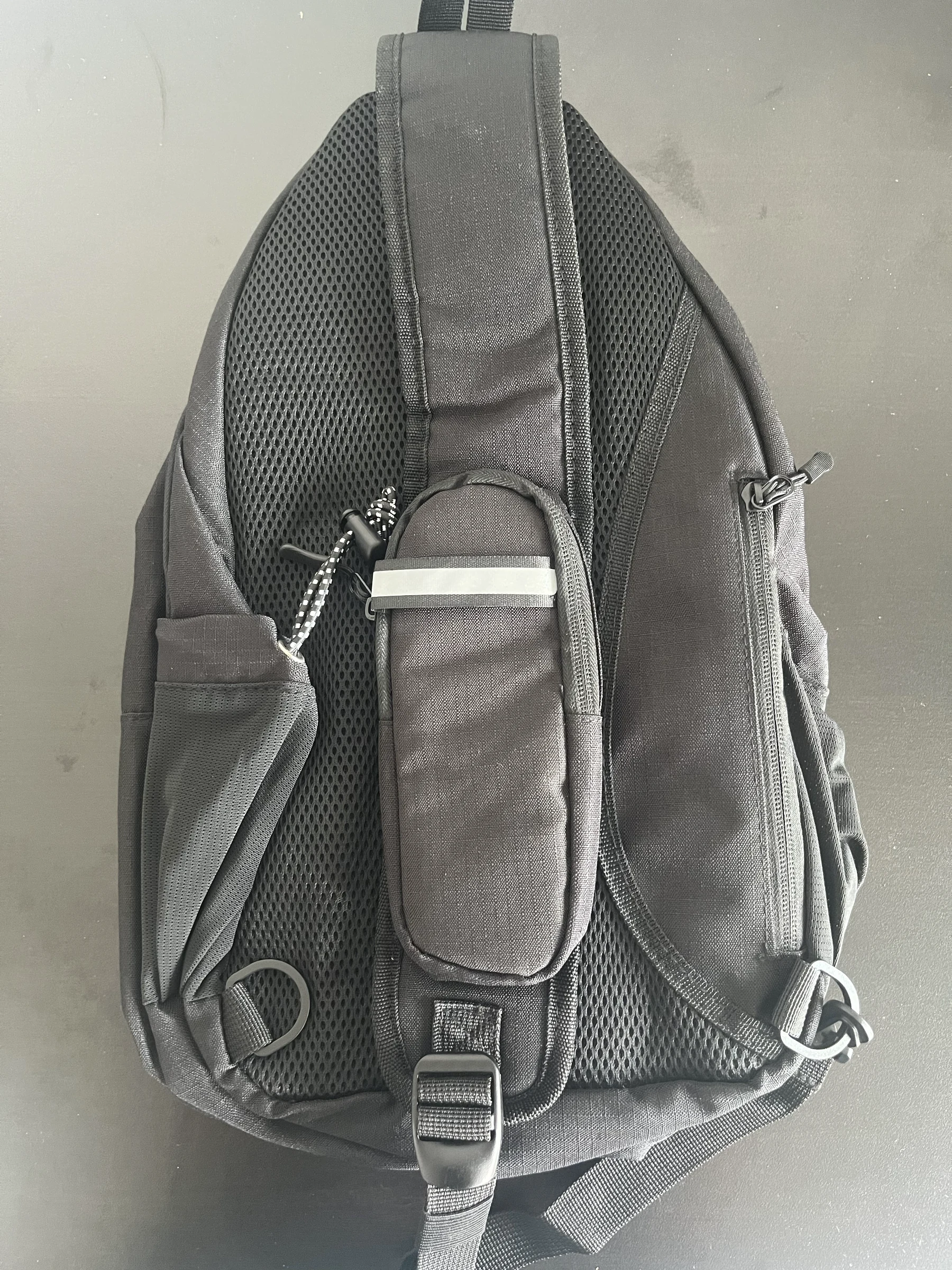 Click to enlarge
Ask for a close-up of each strap attachment and a short demonstration of the adjuster. On the sample, check adjustment with the intended contents and note any slipping, awkward access or uncomfortable contact. Any load or repeat-use requirement still needs an agreed method and acceptance criteria.
A photo request you can use for ATP-S-093
Please show the strap attachment points, the adjustment range and the main opening on ATP-S-093. We will confirm our intended contents and carrying requirements before choosing a sample. Please identify any detail that differs from the photographed version.
This is a request template, not a record of a test already performed. Use the reply to decide what to examine on a physical sample; do not mark strength or comfort as approved from a photograph.
Make the sample decision explicit
A useful approval separates what you have checked from what remains open. These are suggested record fields, not a report for any published SKU.
| Stage | Record | Next decision |
|---|---|---|
| Photos or video reviewed | Model and version shown; details visible and measurements still needed | Request the missing view or measurement |
| Sample received | Date, version, actual materials and any temporary substitutions | Check fit and operation with the intended contents |
| Changes requested | Each difference, the agreed correction and how it will be verified | Request confirmation or a revised sample, as agreed |
| Sample approved | Dated specification, artwork, packaging and accepted changes | Agree production and pre-shipment inspection scope |
If the sample uses a temporary zipper or logo, approval should identify what is provisional and how the final component will be checked. A general “looks good” should not silently approve an untested substitution.
Approve branding and packaging too
Check logo size, position, spelling and colour against approved artwork. Check labels, hangtags, instructions and barcodes where they are part of the order. Confirm pack quantities and the carton markings needed for your shipment.
A correct product in the wrong retail pack can still be unsuitable for your sales channel. Include packaging in the sample approval rather than leaving it until goods are ready to leave.
Agree the pre-shipment inspection plan
Before an order, discuss the inspection stage, checks, sampling approach and acceptance criteria. If you require an AQL-based plan or laboratory testing, agree it specifically; this checklist does not establish a default inspection level or a guarantee of zero defects.
At AITradePath, the producing factory checks the order first and our team checks export orders again. You may also appoint your own independent third-party QC company. Confirm the scope, timing and any fees so access and documents can be arranged before shipment.
For sports backpacks, our own factory makes the products. Other sports categories can involve partner suppliers. The sourcing route does not remove the need for a clear specification and agreed checks.
Resolve differences before release
If inspection identifies a difference, document it with the relevant specification, photos or measurements. Agree the corrective action and whether another check is needed before shipment. Keep the approval record clear when a change is accepted.
The practical sequence is: brief, sample, written approval, production, agreed checks and shipment release. See how we work and trade terms for the commercial process.
A simple record for each difference
Keep one entry per issue so a photo does not become separated from the decision it supports. Copy this outline into your sample notes:
- Reference: order, model, sample version and inspection date.
- Location: pocket, seam, strap, logo or packaging area.
- Requirement: the approved dimension, artwork or written specification.
- Observation: what differs; include a photo or measurement where useful.
- Action: change requested, person responsible and target date.
- Verification: how the correction will be checked and by whom.
- Decision: open, corrected and verified, or accepted change with written approval.
For example, if a logo position differs, photograph it alongside the agreed reference and record the measured position. Do not invent a tolerance after inspection: ask whether a tolerance was agreed, and resolve that before approving the result. A generic tick against “logo checked” leaves the important decision unanswered.
Use video for a closer look
A short video can show stitching, zipper operation and compartment access more clearly than a catalogue image. Browse our TikTok backpack videos, or ask us to film the detail you are evaluating. Video supports a buying discussion; it does not replace a defined inspection or test.
If you are still preparing the specification, start with what to include in a custom backpack brief. Send your requirements when you are ready to discuss the sample and checks.