A useful backpack enquiry tells the maker what the bag must do, not just what it should look like. You do not need a finished tech pack to start: a reference photo, intended use and target quantity give us something concrete to discuss.
AITradePath's own factory makes sports backpacks and sportswear. Our Hangzhou team coordinates the brief, samples, export checks and shipment. The examples on our backpack page are a starting point, not the complete range.
Start with the user and what they carry
A team training bag, racket backpack and everyday sports bag can need different compartments even when their outside dimensions look similar. Tell us who will use it and list what must fit inside.
- Equipment: shoes, ball, racket, clothing, bottle or laptop, as relevant.
- Separation: which items need their own pocket or compartment?
- Carrying: shoulder straps, grab handles, a trolley sleeve or another requirement.
- Use: daily training, team travel, retail sale or a promotional programme.
For a pocket that must fit a particular item, send that item's dimensions. A capacity label alone does not establish whether your equipment fits through an opening.
Example: what an inside photo can tell you
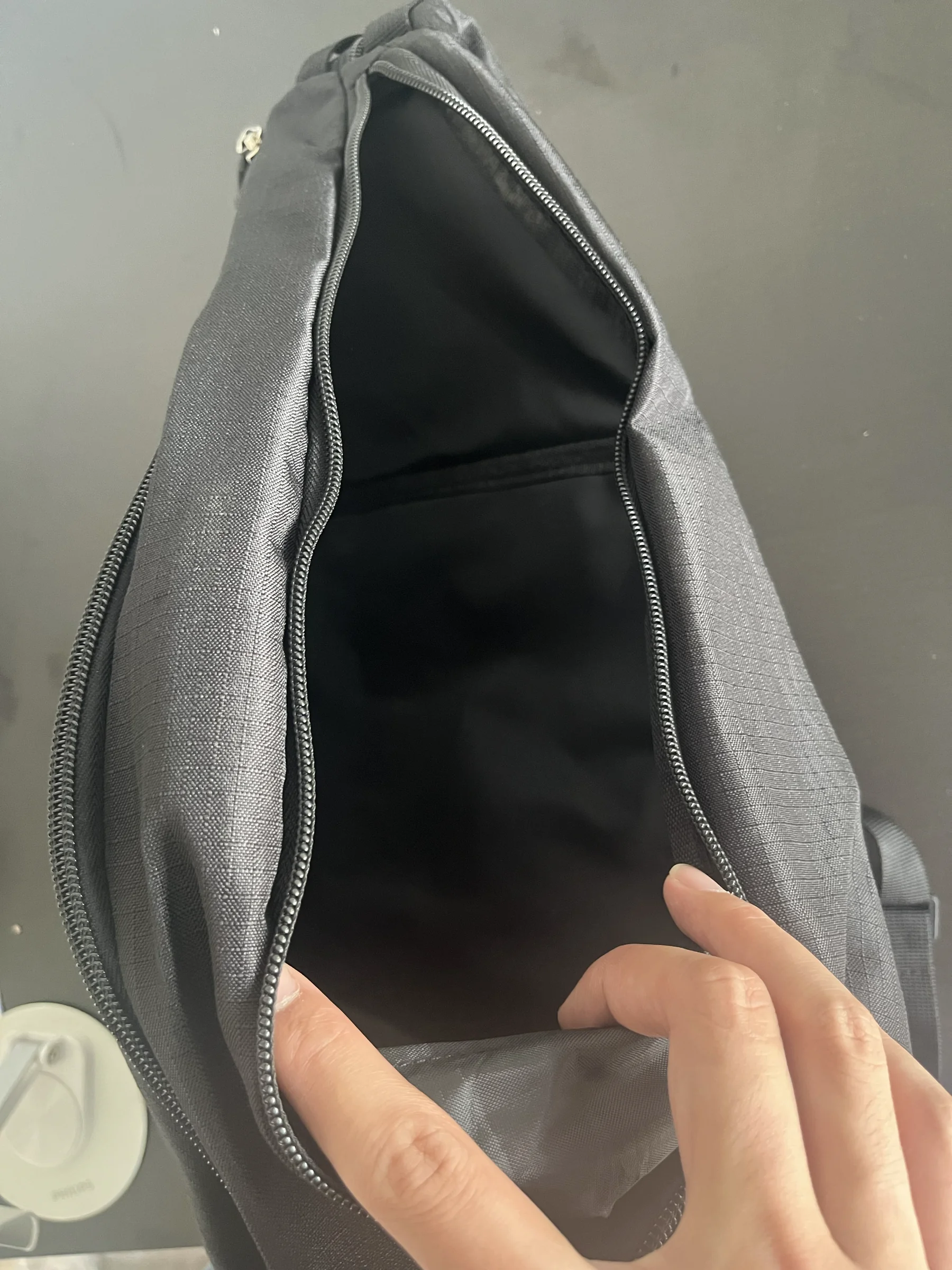 Click to enlarge
For a racket bag, send the dimensions of the racket including its handle and any cover. Ask for the opening and usable compartment measurements, then confirm fit with the intended equipment in a sample. If shoes and clean clothing must stay separate, specify that requirement rather than assuming a visible divider provides it.
Specify the fabric without relying on one label
Our online examples include Oxford fabrics, polyester, nylon and coated fabrics. These are options to discuss, not a promise that every construction is available for every order.
Denier alone does not establish durability or waterproof performance. Fabric construction, coating, seams and the finished design all affect how a bag behaves. If you need a specific performance level, describe the use and agree how the sample will be checked.
| Decision | Useful information to send |
|---|---|
| Outer fabric | Reference material, preferred finish and expected use |
| Lining | Colour, feel and any compartment requirements |
| Water exposure | Light rain, wet equipment or another defined scenario |
| Hardware | Zipper, buckle and strap requirements or reference photos |
| Reinforcement | Where the load will sit and which areas need attention |
Do not assume that a water-repellent fabric makes the whole backpack waterproof. Claims for the finished product need their own evidence.
Show the branding and colour requirements
Send your logo artwork, its intended size and placement, and any colour references. If you already have a preferred decoration method, include it; otherwise we can discuss a suitable approach with the factory against the material and quantity.
Ask the quote to separate a simple logo change from changes to fabric, dimensions, pockets or construction. They can have different sampling requirements and costs. Screen colours are useful references, but approve the physical colour and finish when consistency matters.
Separate a logo change from a new construction
The starting point affects what needs confirming before a quote. Use the same reference when comparing options, and ask the maker to identify any assumption.
| Your request | Confirm before quoting | Approve on the sample |
|---|---|---|
| Your logo on an existing layout | Artwork, position, size and a decoration method suited to the surface | Finished logo appearance and placement |
| Different fabric, colour or hardware | Exact material or component, availability and quantity by colour | Feel, finish and operation of the chosen components |
| New dimensions or pockets | Equipment measurements, opening size and proposed layout | Actual fit, access and separation with the intended contents |
For printed, embroidered or patch logos, ask which method suits the selected fabric and logo detail. Request any setup or sample charges separately. Do not assume every method works on every panel, or that a screen mockup is final approval.
Turn the ATP-S-032 photo into a useful request
Here is an illustrative brief based on the published inside photo, not a completed customer order:
Reference: ATP-S-032. We are considering this layout for team use. Our equipment dimensions and order quantity are still to confirm. Please identify the usable compartment and opening measurements, and which logo positions can be sampled. We will check fit with our equipment before approving the layout.
Replace the open points with your actual measurements, quantity and destination. This asks for a specific next step without guessing capacity, cost or performance from the image.
State quantities, packaging and destination
- Quantity by design and colour, including any size or pack variations.
- Retail packaging, hangtags, labels and barcode requirements.
- Destination country and whether you need a port quote or delivery to an address.
- Required arrival date, including time for sample approval and transport.
- Target budget, if available, and the features you do not want to compromise.
Our published standard run is 300–500 pieces per style, with first orders from 50 under applicable conditions. The exact minimum, colour mix and cost depend on your specification and are confirmed in the quote. Read what a low MOQ costs before comparing small-order unit prices.
Agree the sample and checks before production
Use the sample to confirm fit, layout, material, branding and workmanship. Record the agreed specification and any changes in writing; a photograph can miss feel, dimensions or the way a zipper works under load.
Tell us early about destination-market testing or documentation requirements. A catalogue photo does not prove compliance, and a document for a different model is not evidence for yours. Production timing should be agreed after the sample and specification are approved; our published 25–40 day range is an indication, not a guaranteed arrival date.
Our backpack sample and inspection checklist explains what to check next. You can also browse our TikTok videos, or ask for a close-up of a particular part of the bag.
A short brief you can copy
Copy these lines into your enquiry and fill in what you know. “To confirm” is a useful answer; it keeps an open decision visible.
- Reference: photo, sketch, link or model number.
- Use and contents: who will carry it; equipment and dimensions.
- Layout: required compartments, openings and separation.
- Material: fabric, lining and finish, or “please suggest”.
- Branding: artwork, size, placement and colour reference.
- Quantity: total and proposed split by design and colour.
- Packaging: labels, barcodes, individual pack and carton needs.
- Destination: country and port or delivery location.
- Timing: required arrival date and flexibility.
- Approval: sample needs, checks and required documents.
Compare quotes against the same brief
Ask each supplier to identify what is included, what remains unconfirmed and what would change the price. Compare the same fabric and construction, logo process, packaging, quantity split and delivery basis. A lower unit price is difficult to interpret when those details differ.
Keep sample charges, tooling or artwork setup, inspection arrangements and freight separate where applicable. Before approving production, resolve substitutions and keep one dated specification that both sides can refer to.
Missing an answer? Say so. We can clarify the open decisions before treating them as a production specification. Discuss your brief.